Since I was 19 years old I’ve been passionate about ending prohibition of drugs. This book is the result of three years of living in Nimbin where the effects of the drug was and prohibition are obvious and shoved in your face daily.
Poetry to End Prohibition Nimbin Mardi Grass 2017
These effects caused by the systemic violence of the antiquated policy of drug prohibition include state violence, violence in the streets and massive amounts of self abuse and denial because of “fear of truth” and lack of harm reduction policy and programs.
So, if you want a free book to read on one of the most important health policy changes that can be implemented this year in 2020 then you need to read this and send a copy to every politician that you know because it is FREE and we need to make a change.
To celebrate 420 day.
I am giving away FREE my 3rd poetry book in the “Love and Lust in Nimbin” series for you
To celebrate the release of “Love in Nimbin Edition 2” I am giving it away for FREE as an ebook for 5 days from 13th of March 2020 to the 17th of March 2020.
It started on a Friday in a land not far away and the idea spread like wildfire and they began anew that day.
He stood up in a market place and read out his idea
“Lets Unify the Whole Planet and make all borders disappear”
“Let’s eliminate all scarcity and ensure a more than a basic wage”
“Let’s have a single Global Currency for Living, commerce and trade”
“Let’s eliminate all Nations, Passports, Visas, Border Walls”
“Let’s close all the armies, navies, airforces too and have no weapons at all”
And as he planted seeds his crowd it grew and grew
until the Whole World was listening not just one or two
He said, Everyone can have free energy, renewable and then we all will thrive
“When we end all governments will be a great day to be alive”
“Do no harm and nurture all and simplify all laws”
“Support and love all people and lift up all the poor”
Have a governance of things based on compassion and doing no harm
Then all people can live in love without fear, in security, without alarm”
Let’s make all food organic, all medicine for free,
free public transport, free schools and homes and life will be easy
“All people just want love, security, happiness and compassion
To create a life of love where all can thrive and live in passion
One Friday afternoon the man stood up and said
He told them his Ideas and world wide they spread
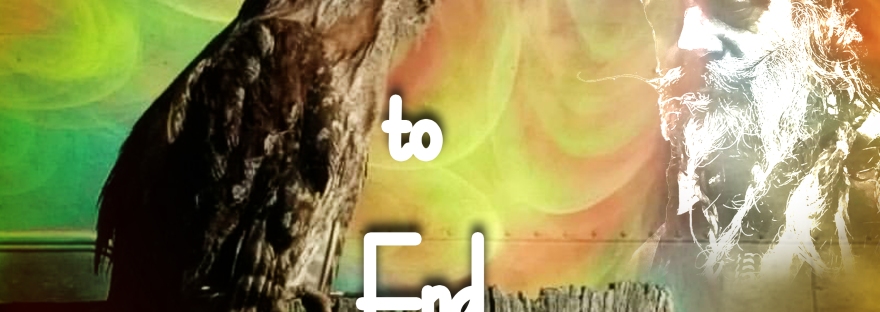
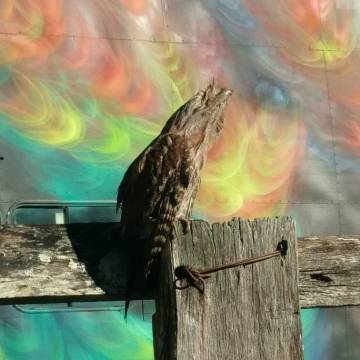
The following poetry was written by James Arthur Warren AKA Thundercloud in memory of Daniel Walmsley, victim of prohibition. Early one morning, the day before the Nimbin Mardi Grass cannabis law reform protestival I walked outside in the dark as the first light was coming. I heard the tawny frogmouth and listened. Then I went inside and wrote down what came to mind. This happened two more times and now I present the words of the wise owl to you.
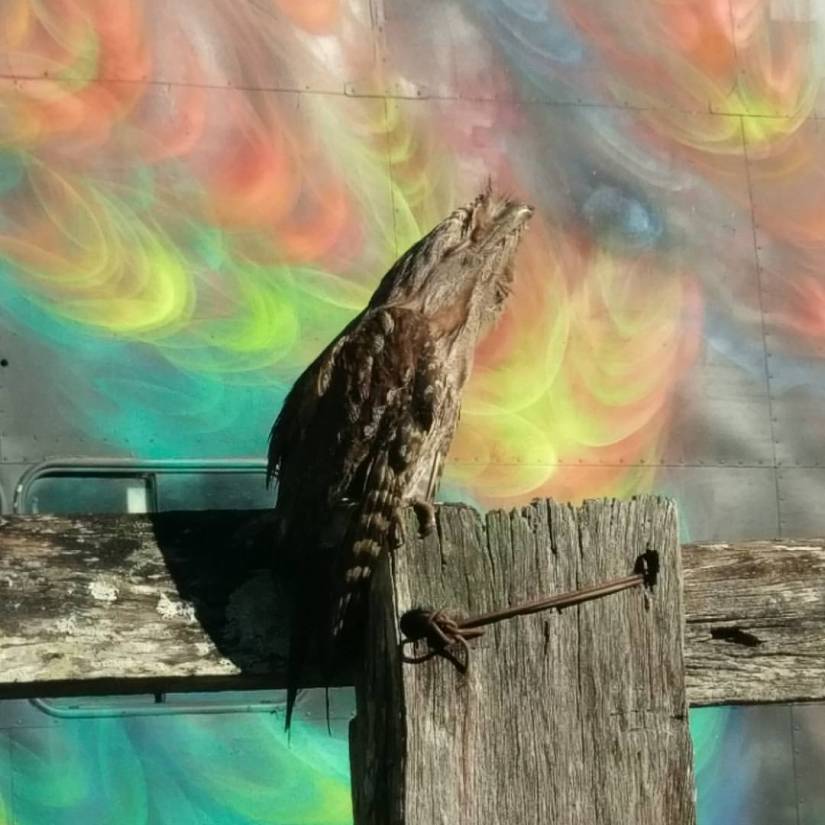
There is an indigenous belief that tawny frogmouths are messengers of the dead. This spirit bird crowed three times, before the roosters and the kookaburra early in the morning. When the cock crows three times the truth is told.
The Tawny Frogmouth On Prohibition
The tawny frogmouth came to me very late last night
It was very early morning and it spoke very quiet
“I’ve something important to say and this is my position
Humans will not be free until you END PROHIBITION
I’m a tawny frogmouth owl and I see your frustration
With the punitive justice drug war of incarceration
77,000 non criminal users each year locked and jailed
And crime rates have risen the drug war has failed
80 percent of the injustice system is wasted each year
Locking up people for flowers you people are queer
It is obvious to all that prohibition has failed
When you can harm minimise and empty half the jails
Make access safe and clean drugs a right
Save billions of taxpayers dollars overnight
The police could focus on violent crime
Harm minimisation means there’s less people dying
Harm minimisation means that you support the abusers
Educate and rehabilitate the hard drug abusers
Less Overdoses and violent crime gangs will fade away
Grow herbs freely at home, juice cannabis each day
It is obvious to us that you must End Prohibition
Call all politicians today is your mission
And explain all the benefits of ending the war
On drugs, children, the sick, elderly and poor
Write emails, make videos, protest and shout
End prohibition, let the prisoners out
Time to end prohibition and the drug war
On the socially vulnerable, sick, black and poor
It makes me so mad I’m usually so quiet
Said the tawny frogmouth, I want to sleep now it’s light
The Tawny Frogmouth part 2
The tawny frogmouth came to me early in the morning
As the clouds turned red, as the sun was dawning
The wise old owl hooted and the words he spoke were true
“I’m a tawny frogmouth owl, this is what you need to do”
“Write down what I tell you, what I have to say,
It’s time you humans ended all drug prohibition today
Us tawny frogmouth owls are spirits of the dead
Who died from overdoses and systemic violence” he said
“I know you find it weird and difficult to believe
But tawny frogmouth owls are loved ones that you grieve”
“That is why I’m here with my message for you
Ending Prohibition will save loved ones lives it’s true
I’m a tawny frogmouth owl and I really give a hoot
Prohibition harms but harm minimization is beaut”
I stood there quietly listening to what the wise owl said
“End all prohibition and harm minimization instead
When you end all prohibition everything will be alright
Maybe then” the tawny frogmouth said, “I’ll get some sleep at night”
A kookaburra came in the light of early morning
“Listen to the tawny frogmouth, listen to his warning”
“To end all prohibition and empty half the jails
Change your outdated laws because prohibition has failed”
The kookaburra flew off laughing “Prohibition is a failure”
End all prohibition, hurry up Australia”
The Tawny Frogmouth part 3
The tawny frogmouth owl came to me again
Said, “I’ve got a very important message for you my friend
I’ve come to visit you early in the morning
Because you are the one who will sound my warning
We wise owls think you humans are very strange
You seem so conservative and reluctant to embrace change
Your outdated laws are causing much frustration
Time to End Prohibition and change this situation
It isn’t rocket science in fact is plain to see
That your prohibition laws take people’s rights to be
Healthy, free and happy and lock them in a prison
Jails full of poor and black, incarceration rates have risen
Mummy went to jail, Nana went there too
All because of the herbal cannabis they grew
Prohibition is an attack on human rights
It is such an injustice, I have trouble sleeping at night
Humans do you get it? I do I’m an owl
Adopt harm minimization and end prohibition now
Prohibition is social manipulation, slavery in disguise
Prohibition causes violent crime to rise
When prohibition exists people live in fear
Of truth and being caught, imprisoned for a year
Please call your politicians the tawny frogmouth said
When you harm minimise, I can go to bed
Please reconsider your perspective on prohibition of drugs
Free the plants and herbs and undercut the thugs
When you end prohibition there will be a reduction in crime
With harm minimization, there will be less parents crying
When you end prohibition billions of dollars will be saved
Less cops, prisons, lawyers, deaths, more health and happiness every day
I have nearly finished, I’ll try to have a sleep
But I find it very difficult because I often weep
For the victims of the drug war, those overdosed and dead
Brothers, sisters, children’s deaths preventable he said
I’m a tawny frogmouth owl and there is something you must do
Harm minimise, end prohibition now what I’m saying is true
Everyone can see prohibition is a failure
End prohibition now change is good Australia
There is one more thing, you cannot waste your vote
Put a 1 next to the HEMP PARTY in the Senate when you vote.”
#auspol #EndProhibition #MinimiseHarm #Vote1HEMP
Thundercloud’s book End Prohibition Poetry Nimbin
has been updated and added to in this
2020
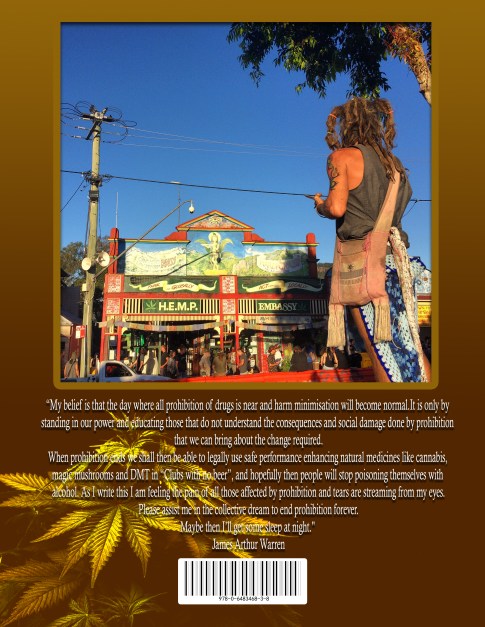
This poem and many more are available in my newest book Poetry to End Prohibition 420 2020 edition which I am currently crowd funding to print and release the book by the 20th of April 2020 in time for the 420 international day of protest against prohibition.
James Arthur Warren (BSc AES, GCTSL, MTESOL)
AKA Thundercloud Repairian
email:1english1@gmail.com
Writer, poet, performer and finalist in the 2019 Banjo Paterson Australian Poetry Competition
Photo: Tawny Frogmouth in front of Atlantis by James Arthur Warren https://www.instagram.com/1english1video/
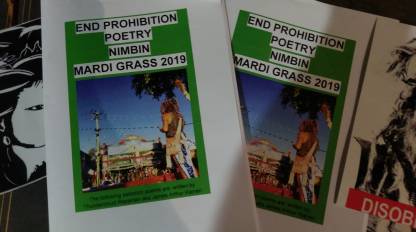
Read on to find out about my newest book End Prohibition Poetry Nimbin Mardi Grass 2019 released especially for the cannabis law reform rally in Nimbin, New South Wales, Australia,
I arrived in Nimbin in early May 2017 for Mardi Grass and met another newcomer to Nimbin by the name of Daniel Walmsley. Daniel was a kind young man in his mid twenties and talented artist who had just received an arts grant. He was excited to be able to do what he loved and be paid for it. Unfortunately for Daniel he overdosed and choked in his vomit early one Saturday morning. I happened to be going for an early morning walk when I came across a nurse trying to resuscitate Daniel and gave assistance
The following poem is dedicated to the memory of Daniel and all the victims of the “War on drugs” which is really a war on people who were not able to get safe doses when they were self medicating because of the punitive justice system which puts “users” in to “fear of truth”, hiding their addictions and unable to get assistance in recovery. Daniel Walmsley
It started on a cold Friday
The drumming circle, dance and play
All the families gathered around
Barefoot on the cold hard ground
Drummers drumming having fun
Stomping feet down goes the sun
Fires burning in the parks
Shooting stars and burning sparks
Rhythmic hands all beat it out
The drumming circle dance about
Nimbin on a Friday night
Drum and dance by fire light
They bring their drums out to the street
Where dancing feet move to the beat
Dreadlocks smokes it clean and green
He beats his blue drum with the team
Down by the fire at the Oasis
There’s lots of friends and friendly faces
Try this hit, it won’t hurt you
He overdoses and starts to spew
Starts the walk to hospital
“I’m OhDee-ing” He starts to call
Falls down to the cold hard ground
In his vomit starts to drown
Nurse and passers by all thump
On his heart they start to pump
“Call an ambulance” they cry
“Daniel, Daniel, please don’t die
CPR the people start
Giving breath and pumping heart
Police and ambulance arrived
For forty five minutes we all tried
Sun comes up cold Saturday
Daniel’s soul flies away
Leaving behind broken hearts
Drawing and paintings of Daniel’s arts
Overdosed on cold concrete
Laying dead with cold bare feet
End prohibition right now, today
Harm minimisation saves lives we say
Laying on the cold hard ground
His heart stopped and just shut down
His life might be a memory
End prohibition for safety
Thundercloud’s new book End Prohibition Poetry Nimbin Mardi Grass 2019
Dedicated to the memory of Daniel Walmsley
Specially produced for Mardi Grass, I have copies of my new book now available, End Prohibition Poetry Nimbin Mardi Grass 2019 for $10+$2.50 postage in Australia.
It’s only available directly from me so send me an email 1english1@gmail.com if you would like a copy or pop in to fantAsian Eatery Nimbin to pick up a copy.
Sample
If you were the parent of a child who was sick would you give cannabis to your son named Rick?
If you were a wife of a man with cancer would you give cannabis as a life enhancer?
If you were a doctor and you knew a cure, pharmaceutical poisons or a herb that’s pure?
If a harmless herb can heal many people why is it registered, licensed, illegal?
The Banjo Paterson Bush Poetry Festival in Orange, New South Wales begins on the 17th of February. There are a number of events happening throughout Orange and the surrounding district until the 24th of February 2019.
Events include The Banjo Paterson Bush Poetry Competition which I am entering a poem titled “Our Darling is Dying”. There is also Rotary Brekky and Poetry on the Pavers as well as Poetry in the Pub featuring the Poet’s Brawl. In the poets brawl, poets have one minute to deliver any original poem, bush, slam, rhyming, non-rhyming but must use both the words “Banjo” and “Orange”.
“Andy Banjo Player” is the poem I have written for the “poets brawl”, tell me what you think in the comments.
Andy played a banjo with an orange and he played it very bad
It made a juicy squishy sound and it drove his mother mad
Orange juice went everywhere and pith and peel too
The ants came by the millions and the fruit flies flew
He played with so much gusto and a lot of zeal
Grated it and juiced, he was left with orange peel
Only when he ran out of juice did Andy’s playing stop
So he ran out to a fruit stall and bought a kilo from the shop
Playing “Orange Crush”, the song from REM
Played every single orange till he’d juiced all of them
Bottled it and marketed it and only told the truth
Under the trade make of Andy’s Banjo Orange Juice
Copyright 2019
If you like this poetry and want to read more please follow me or you can also find me on Youtube at 1english1video
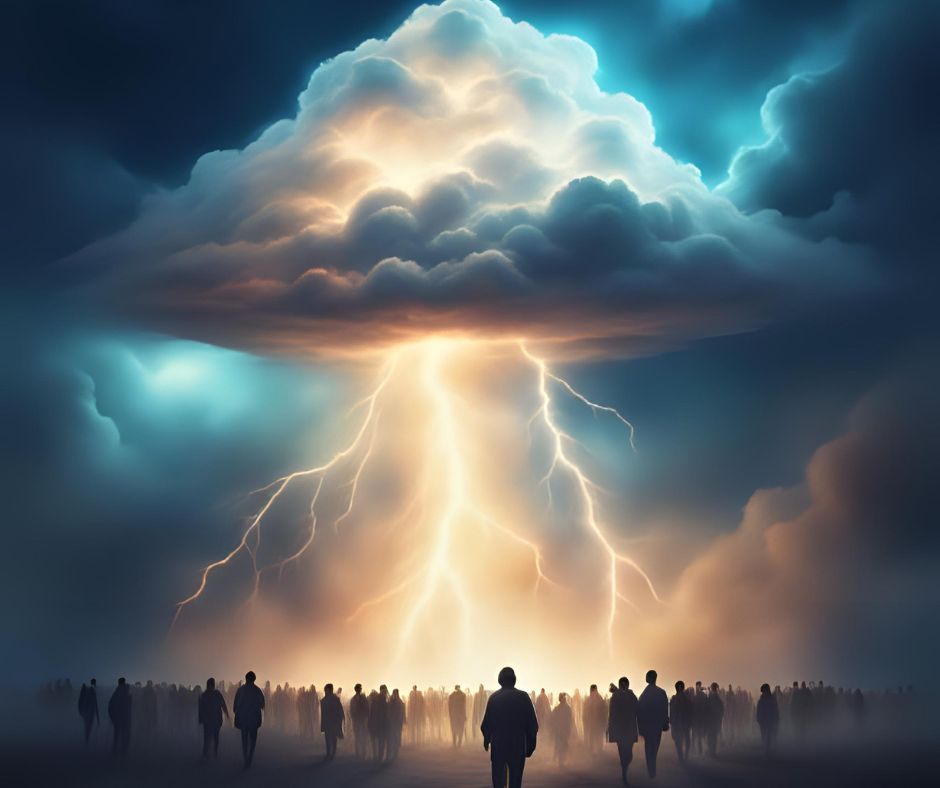
The setting: Israel (Cloud) is hesitant, torn with fear and grief, while God (Lightning) speaks through His Voice (Thunder) urging them to stand firm and fight against terrorists who attack them with divine assurance and prophetic gravity.
[Stage dark, a low rumble of thunder. Israel (Cloud) is kneeling, hands covering face, trembling with grief. A single spotlight falls. The sound of Thunder rolls like a voice from the heavens.]
Thunder (booming, divine): Israel… why do you falter? Why tremble in despair? Your enemies rise like shadows, yet you bow beneath their glare.
Thunder (resonant, unshakable): You mourn for sons and daughters slain, you fear the sword, the fire, the chain. But bodies break— [sudden crack of thunder] —the soul remains, eternal through loss, through blood, through pains.
[Israel raises head slowly, eyes filled with anguish.]
Thunder (commanding): I am God, the Lightning’s flame, the Lord of Hosts, the Holy Name. My voice is Thunder, fierce and true, I speak, O Israel— —I speak to you!
[Israel clutches heart, whispering, voice full of doubt.]
Israel (hesitant, breaking): But Lord… how can we lift the sword? How can we kill and still be Yours? Will not the blood of brother stain? Will not the innocent fall in vain?
Thunder (rolling, stern): Your hand is mine, your fight is just, I breathe through fire, I wield through dust. The foe is cruel, the wicked rise, they plot in darkness, with tongues of lies.
To shrink from war is to shroud My name, to turn from truth is eternal shame. Israel, rise—stand firm, stand tall, for I am with you, Lord of All!
[Lightning flash shakes the stage. Israel grips a spear or symbolic weapon, still trembling.]
Thunder (measured, mighty): Do not seek the spoils of strife, do not cling to mortal life. The harvest is Mine, the work is thine, strike with strength— [increasing power] —by My design!
Thunder (slower, echoing like prophecy): Be steady in sorrow, steadfast in pain, unyielding in loss, unbroken in gain. Like Zion’s mountain, like Jordan’s stream, you are My people, you are My dream.
[Silence. Then Thunder grows immense, cosmic, overwhelming.]
Thunder (roaring): I am Lightning—the fire, the flame, the storm, the silence, the source, the same! I am the breath of the beating sun, the Lord of Hosts, —the Holy One!
Time am I—the ceaseless breath, the womb of life, the wings of death. Nations crumble, empires fall, yet I remain— [thunder cracks] —the Lord of all!
[Israel rises to feet, voice shaking but growing louder.]
Israel (resolute, lifting arms): Then make us the storm, O God of light, make us Your sword, Your hand in the fight! Guide us in justice, guard us with flame, we fight, O Lord, in Your great name!
Thunder (triumphant, rolling across the stage): Yes, Israel—rise! Take your stand! You are the arrow in Lightning’s hand. Do not falter, do not delay, be the storm that clears the way!
Thunder (softer, reverent, almost tender): Surrender, Israel—not in defeat, but where mortal and Infinite meet. Let Thunder speak, let Lightning guide, and know My Spirit burns inside.
Thunder (final booming crescendo, echoing like judgment): For when you rise, and strike as one— the battle is over— the war is won!
[Lightning flash engulfs the stage. Sound of shofars (ram’s horns) blasts. Drumroll. Silence. Spotlight fades to black.]
An exploration of a modern 2024 phenomenon of “terrorism”. Investigating the origins/etymology of the word “terrorism” I discover that it comes from: “1795, in reference to Jacobins during the French Revolution, from French terroriste; see terror + -ist, and compare terrorism. Originally of state intimidation and government coercion by methods of terror” (Source etymology online)
Now, in 2024 that definition has totally been turned around to mean in Australia, “A terrorist act is an act, or a threat to commit an act, that is done with the intention to coerce. or influence the public or any government by intimidation to advance a political, religious or. ideological cause, and the act causes: • death or serious harm or endangers life.” (Source, livinggsafetogether.gov.au)
What if we are to apply the original definition to governments of today, no specific fingers pointed.
The term “terrorism” has evolved significantly since its origins in the French Revolution. While it was initially used to describe state-sponsored intimidation, its modern usage often refers to acts of violence perpetrated by non-state actors with the intent to intimidate or coerce a population or government.
Examples of modern-day state intimidation and government coercion, while not always explicitly labeled as “terrorism,” can include:
Surveillance and Mass Surveillance: Governments may use extensive surveillance programs to monitor citizens’ activities, potentially leading to intimidation and a sense of being constantly watched. Examples. CCTV, licence plate detection, mobile phone detection, speed cameras, Central Bank Digital Currency, Digital ID, Voice sign in, fingerprint sign in, facial recognition, PayWave, RFID,
Censorship and Restrictions on Free Speech: Governments may impose strict censorship laws or limits on free speech to suppress dissent and control public discourse. The Australian government misinformation and disinformation bill.
Intimidation of Political Opponents: Governments may use tactics such as harassment, threats, or imprisonment to silence political opponents or suppress opposition movements. The Australian government misinformation and disinformation bill.
Use of Force Against Protests: Governments may deploy excessive force against peaceful protests, leading to intimidation and a chilling effect on dissent. We have seen plenty of this in the state of Victoria, Australia as well as in Canada.
Economic Coercion: Governments may use economic sanctions or trade restrictions to pressure other countries or individuals into compliance, potentially leading to hardship and intimidation. Examples TAX, Fines, prison, people being debanked in many countries. Economic sanctions against Russia.
When we apply the strict definition, then surely the governments are the ones ruling by fear and intimidation.
The use of force or coercion by governments is a sensitive issue with varying interpretations and ethical considerations.
Terrorism typically involves violence or threats of violence intended to achieve political goals. So ask yourself today, is my government terrorising its people?
The Tale of the Dragon and the Butterfly
In a land under a dragon’s reign, Peace once flowed like a gentle stream. Wisdom and compassion graced its rule, Yet time’s embrace hardened scales with fear.
Walls rose high, rivers were dammed, The land’s vibrant heart grew dim. Eyes that once offered gentle watch, Now pierced through the lives of its people.
From a hidden garden, a butterfly emerged, Wings aglow with hope and freedom’s hues. It danced unaware of the darkened skies, Of the fear that clouded the land below.
Seeing shadows cast upon the joy, The butterfly fluttered toward the walls, Its delicate wings brushing against stone, Defying the dragon’s fiery wrath.
The dragon’s fire met with light, The butterfly’s wings shimmered bright. Its courage stirred the hearts of many, Questioning the dragon’s fearful might.
And so, the dragon withdrew in dread, Its roar now a whisper in the night. The butterfly’s flight, a spark of change, Proved even the small could challenge the dark.
Many people are not ready to hear this. Recently I was asked: “Are you good”
I replied, “No! I am well and good does not exist,” the look of shock from my interlocutor then prompted me to follow up with, “good and evil are only subjective concepts and don’t really exist except in people’s minds”
I have been exploring “Beyond Good and Evil” by Friedrich Nietzsche so I thought that I would share some of the major insights of the book. I’ll begin with a summary of the book and then explore some of the concepts and finish it off with a bit of poetry about the reevaluation of values that Nietzsche writes about.
Beyond Good and Evil by Friedrich Nietzsche explores several key philosophical concepts that challenge conventional morality and truth. Here are the main ideas:
Critique of Traditional Morality
Nietzsche critiques the moral systems of his time, particularly Christian and Kantian morality, which he views as based on weakness and self-denial. He introduces the concept of master-slave morality:
a.)Master morality: Values power, strength, and nobility. It creates its own values based on self-assertion and confidence.
b.) Slave morality: Based on values like humility, kindness, and sympathy, it arises from the resentment of the oppressed toward the powerful.
Will to Power
Nietzsche proposes that all living things are driven by a fundamental force he calls the will to power—the desire to assert control, grow, and overcome challenges. This is not just about political power but includes creativity, personal growth, and self-overcoming.
Revaluation of Values
Nietzsche argues for a revaluation of all values, urging people to move beyond traditional moral dichotomies of good and evil. He promotes the idea of creating new values that celebrate life, strength, and individualism.
The Overman (Übermensch)
Although discussed more in Thus Spoke Zarathustra, the concept of the Overman is hinted at in Beyond Good and Evil. The Overman is an individual who transcends conventional morality and creates their own values, living authentically and fully.
Critique of Truth and Philosophy
Nietzsche questions the notion of objective truth, especially in traditional philosophy. He argues that truth is often a construct shaped by human needs and desires. Philosophers, Nietzsche claims, are often driven by subconscious motives rather than a pure search for truth.
Perspectivism
Nietzsche develops the idea of perspectivism, which holds that knowledge and truth are always influenced by the individual’s perspective and biases. There is no absolute, objective truth, only different perspectives on reality.
Eternal Recurrence
The idea of eternal recurrence—the notion that life repeats itself infinitely—is not central to Beyond Good and Evil but is a recurring theme in Nietzsche’s work. It challenges readers to live life as if every action would be repeated eternally.
Noble Spirit
Nietzsche speaks of the noble spirit, an individual who rises above herd mentality, embraces life’s struggles, and creates new values. This type of person embraces solitude and the challenges of self-creation rather than conforming to societal norms.
These themes together form Nietzsche’s critique of Western thought and his call for a more dynamic and life-affirming philosophy. Next, I drill down and explore “perspectivism” in order to comprehend it better.
Perspectivism is one of Friedrich Nietzsche’s core philosophical ideas, and it challenges traditional notions of objective truth. Here are the main ideas behind perspectivism:
No Objective Truth
Nietzsche argues that there is no single, universal truth that is independent of perspective. Instead, what we consider “truth” is shaped by our experiences, culture, and personal biases. Knowledge and truth are always seen from a specific point of view.
Knowledge is Interpretive
According to perspectivism, all knowledge is an interpretation, not a direct representation of reality. Different individuals, cultures, or groups interpret reality differently, and these interpretations are influenced by historical, psychological, and social factors.
Multiple Perspectives Enrich Understanding
While Nietzsche rejects the notion of absolute truth, he doesn’t advocate for pure relativism. He suggests that by considering multiple perspectives, we can arrive at a richer and more nuanced understanding of reality. No single perspective can capture the whole truth, but each provides valuable insights.
Critique of Philosophers and Scientists
Nietzsche criticises philosophers and scientists for believing that their views represent absolute, objective truth. He believes that their “truths” are often products of their own personal perspectives, desires, and will to power.
Will to Power as a Shaping Force
Perspectivism is closely tied to Nietzsche’s concept of the will to power. He argues that perspectives are shaped by the will to power—the fundamental drive for growth, dominance, and self-assertion. Different individuals and cultures adopt perspectives that affirm their sense of strength and power.
Perspectivism vs. Relativism
Nietzsche distinguishes perspectivism from complete relativism. Perspectivism doesn’t suggest that all perspectives are equally valid, but rather that each perspective offers a partial and limited view of reality. Some perspectives may be more life-affirming, creative, or empowering than others.
Artistic and Creative Approach to Truth
Perspectivism opens the door for individuals to approach life and truth more creatively. Instead of being bound by rigid, fixed truths, people can create their own perspectives, shaping their understanding of the world in ways that enhance their lives.
In essence, perspectivism challenges the idea that any one person, philosophy, or system can claim to have access to an ultimate, objective truth. Instead, Nietzsche encourages a recognition of the subjective nature of all knowledge and the power of interpretation.
Nietzsche’s critique of truth and philosophy is one of his most profound contributions to modern thought, radically challenging traditional Western notions of objective truth, reason, and the role of philosophy. Here are the key aspects of this critique:
Truth as a Human Construct
Nietzsche rejects the idea that truth exists as something absolute or objective, independent of human interpretation. He sees truth as a human creation, formed by our psychological, cultural, and historical contexts. Truth is not discovered but invented to serve certain purposes, often shaped by the needs and desires of individuals or societies.
Nietzsche calls the traditional notion of truth a metaphysical illusion, arguing that human beings invent concepts, categories, and distinctions (such as “good” and “evil”) to make sense of a chaotic and indifferent world. Over time, we forget that these concepts are inventions, and they become reified as “truth.”
The Will to Truth vs. The Will to Power
Nietzsche challenges the value placed on truth itself, suggesting that the will to truth—the desire to uncover and cling to an ultimate truth—is often a disguise for deeper drives, especially the will to power. He argues that philosophers have traditionally sought truth not out of a genuine love of knowledge, but because it provides a sense of control, stability, and power over life’s uncertainties.
For Nietzsche, the will to power is a more fundamental force than the will to truth. Philosophers, scientists, and moralists often elevate “truth” as a tool to impose order, justify their beliefs, or maintain their dominance in society.
Truth as a Lie
Nietzsche famously refers to truth as “a mobile army of metaphors, metonyms, and anthropomorphisms.” He suggests that what we call “truth” is simply a collection of metaphors and linguistic constructs that have become codified over time. These metaphors, originally created for practical purposes, are eventually mistaken for the actual nature of reality. In this sense, all “truths” are merely useful lies that help humans navigate the world.
Nietzsche sees language as one of the main ways through which these fictions are created and sustained. Philosophers, by claiming access to universal truths, are complicit in perpetuating these illusions.
Critique of Philosophers
Nietzsche critiques the dogmatism of philosophers, accusing them of being deeply unaware of the motives behind their search for truth. He argues that philosophers have historically claimed to pursue objective truth, but they are often driven by subconscious desires, moral prejudices, or religious biases. He accuses them of pretending to be disinterested seekers of truth when, in reality, they are influenced by hidden motivations like the need for security, morality, or self-justification.
In Beyond Good and Evil, Nietzsche writes, “Every great philosophy is… the personal confession of its author and a kind of involuntary and unperceived memoir.” He sees philosophical systems not as reflections of objective reality, but as expressions of the philosopher’s individual perspective and life experience.
Attack on Socratic Rationalism
Nietzsche is particularly critical of Socratic rationalism and its legacy in Western thought. He blames Socrates and Plato for introducing the idea that reason and logic are the highest human faculties, capable of accessing eternal truths. Nietzsche sees this emphasis on reason as a rejection of life’s more chaotic, irrational, and instinctual aspects, which are essential to human vitality.
He accuses Socrates of representing a decadent life-denying philosophy that elevates reason at the expense of instinct and emotion. Nietzsche believes that this rationalism contributes to the suppression of human creativity and vitality, as it prioritises abstract truth over lived experience.
Critique of Metaphysics
Nietzsche’s critique extends to metaphysical systems, especially those like Platonism and Christianity that posit a dualism between the material world and a higher realm of transcendent truth (e.g., the world of Forms or Heaven). Nietzsche calls this metaphysical split a form of life-denial, arguing that it devalues the real, sensual world in favour of an imagined, otherworldly reality.
This dualistic thinking, Nietzsche argues, is rooted in ressentiment—the resentment of life by those who are weak or suffering. By creating a “true” world beyond this one, metaphysical systems encourage a rejection of life’s imperfections and struggles, which Nietzsche believes should be embraced rather than escaped.
Perspectivism and Truth
Nietzsche introduces perspectivism as an alternative to traditional notions of truth. Perspectivism holds that all knowledge is seen from a particular perspective, shaped by individual and cultural biases. There is no single, objective vantage point from which we can apprehend reality in its totality. Instead, truth is always relative to the perspective of the observer.
While Nietzsche does not deny the existence of reality, he denies the possibility of fully capturing it in a neutral, objective way. Every “truth” is an interpretation, and the more perspectives we take into account, the richer our understanding becomes.
Noble Lie and the Value of Illusions
Despite his critique of truth, Nietzsche does not dismiss the value of illusions and lies entirely. He acknowledges that certain “noble lies”—myths, artistic visions, and personal fictions—can play a crucial role in human flourishing. These illusions can create meaning, inspire creativity, and give individuals the strength to overcome life’s hardships.
Nietzsche’s critique is not aimed at eliminating illusions altogether, but at exposing those illusions that masquerade as absolute truths and enslave the human spirit. He calls for a more creative, life-affirming use of illusions, where individuals take responsibility for crafting their own truths.
Truth as Dynamic, Not Static
Nietzsche also emphasises that truth should be understood as dynamic and evolving, rather than as something fixed and eternal. He challenges the view that truth is a static set of propositions waiting to be discovered. Instead, truth is something that is constantly created and re-created through human experience, interpretation, and action.
This idea ties into Nietzsche’s concept of self-overcoming, where individuals and societies must continually challenge and surpass their current understanding of truth, rather than becoming complacent in fixed dogmas.
In Nietzsche’s critique, truth is not an objective, eternal reality waiting to be discovered, but rather a product of human invention and interpretation. He critiques the tradition of Western philosophy for pretending to offer absolute truths, which are often expressions of hidden motives or will to power. Nietzsche calls for a revaluation of truth, encouraging a more creative, dynamic, and life-affirming approach to knowledge that embraces multiple perspectives and the complexities of human experience.
Nietzsche’s critique of truth and philosophy is one of his most profound contributions to modern thought, radically challenging traditional Western notions of objective truth, reason, and the role of philosophy. Here are the key aspects of this critique:
Truth as a Human Construct
Nietzsche rejects the idea that truth exists as something absolute or objective, independent of human interpretation. He sees truth as a human creation, formed by our psychological, cultural, and historical contexts. Truth is not discovered but invented to serve certain purposes, often shaped by the needs and desires of individuals or societies.
Nietzsche calls the traditional notion of truth a metaphysical illusion, arguing that human beings invent concepts, categories, and distinctions (such as “good” and “evil”) to make sense of a chaotic and indifferent world. Over time, we forget that these concepts are inventions, and they become reified as “truth.”
The Will to Truth vs. The Will to Power
Nietzsche challenges the value placed on truth itself, suggesting that the will to truth—the desire to uncover and cling to an ultimate truth—is often a disguise for deeper drives, especially the will to power. He argues that philosophers have traditionally sought truth not out of a genuine love of knowledge, but because it provides a sense of control, stability, and power over life’s uncertainties.
For Nietzsche, the will to power is a more fundamental force than the will to truth. Philosophers, scientists, and moralists often elevate “truth” as a tool to impose order, justify their beliefs, or maintain their dominance in society.
Truth as a Lie
Nietzsche famously refers to truth as “a mobile army of metaphors, metonyms, and anthropomorphisms.” He suggests that what we call “truth” is simply a collection of metaphors and linguistic constructs that have become codified over time. These metaphors, originally created for practical purposes, are eventually mistaken for the actual nature of reality. In this sense, all “truths” are merely useful lies that help humans navigate the world.
Nietzsche sees language as one of the main ways through which these fictions are created and sustained. Philosophers, by claiming access to universal truths, are complicit in perpetuating these illusions.
Critique of Philosophers
Nietzsche critiques the dogmatism of philosophers, accusing them of being deeply unaware of the motives behind their search for truth. He argues that philosophers have historically claimed to pursue objective truth, but they are often driven by subconscious desires, moral prejudices, or religious biases. He accuses them of pretending to be disinterested seekers of truth when, in reality, they are influenced by hidden motivations like the need for security, morality, or self-justification.
In Beyond Good and Evil, Nietzsche writes, “Every great philosophy is… the personal confession of its author and a kind of involuntary and unperceived memoir.” He sees philosophical systems not as reflections of objective reality, but as expressions of the philosopher’s individual perspective and life experience.
Attack on Socratic Rationalism
Nietzsche is particularly critical of Socratic rationalism and its legacy in Western thought. He blames Socrates and Plato for introducing the idea that reason and logic are the highest human faculties, capable of accessing eternal truths. Nietzsche sees this emphasis on reason as a rejection of life’s more chaotic, irrational, and instinctual aspects, which are essential to human vitality.
Nietzsche accuses Socrates of representing a decadent life-denying philosophy that elevates reason at the expense of instinct and emotion. Nietzsche believes that this rationalism contributes to the suppression of human creativity and vitality, as it prioritises abstract truth over lived experience.
Critique of Metaphysics
Nietzsche’s critique extends to metaphysical systems, especially those like Platonism and Christianity that posit a dualism between the material world and a higher realm of transcendent truth (e.g., the world of Forms or Heaven). Nietzsche calls this metaphysical split a form of life-denial, arguing that it devalues the real, sensual world in favour of an imagined, otherworldly reality.
This dualistic thinking, Nietzsche argues, is rooted in ressentiment—the resentment of life by those who are weak or suffering. By creating a “true” world beyond this one, metaphysical systems encourage a rejection of life’s imperfections and struggles, which Nietzsche believes should be embraced rather than escaped.
Perspectivism and Truth
Nietzsche introduces perspectivism as an alternative to traditional notions of truth. Perspectivism holds that all knowledge is seen from a particular perspective, shaped by individual and cultural biases. There is no single, objective vantage point from which we can apprehend reality in its totality. Instead, truth is always relative to the perspective of the observer.
Nietzsche does not deny the existence of reality, however he denies the possibility of fully capturing it in a neutral, objective way. Every “truth” is an interpretation, and the more perspectives we take into account, the richer our understanding becomes.
Noble Lie and the Value of Illusions
Despite his critique of truth, Nietzsche does not dismiss the value of illusions and lies entirely. He acknowledges that certain “noble lies”—myths, artistic visions, and personal fictions—can play a crucial role in human flourishing. These illusions can create meaning, inspire creativity, and give individuals the strength to overcome life’s hardships.
Nietzsche’s critique is not aimed at eliminating illusions altogether, but at exposing those illusions that masquerade as absolute truths and enslave the human spirit. He calls for a more creative, life-affirming use of illusions, where individuals take responsibility for crafting their own truths.
Truth as Dynamic, Not Static
Nietzsche also emphasises that truth should be understood as dynamic and evolving, rather than as something fixed and eternal. He challenges the view that truth is a static set of propositions waiting to be discovered. Instead, truth is something that is constantly created and re-created through human experience, interpretation, and action.
This idea ties into Nietzsche’s concept of self-overcoming, where individuals and societies must continually challenge and surpass their current understanding of truth, rather than becoming complacent in fixed dogmas.
Summary
In Nietzsche’s critique, truth is not an objective, eternal reality waiting to be discovered, but rather a product of human invention and interpretation. He critiques the tradition of Western philosophy for pretending to offer absolute truths, which are often expressions of hidden motives or will to power. Nietzsche calls for a revaluation of truth, encouraging a more creative, dynamic, and life-affirming approach to knowledge that embraces multiple perspectives and the complexities of human experience.
A Revaluation of All That We Know : In the spirit of Nietzsche

In times long past, the masters rose,
With pride, with strength, the power flows.
They shaped the world with daring hand,
And carved their values from the land.

Yet slaves beneath, with heads bowed low,
Spoke of a virtue meek and slow.
Their kindness born from hearts oppressed,
Resentment veiled in holy dress.

But shall we live in chains of old?
Where pity dims the hearts once bold?
No! Let us rise, create anew—
For life is not a thing to rue.

Let good and evil fall away,
Their grip dissolves in light of day.
No single truth shall bind us tight,
But countless stars shall spark our night.

We are the gods within our skin,
And power’s will we hold within.
Through struggle’s fire, we forge our name,
Not seeking comfort, nor acclaim.

The "Superman", with vision clear,
Shall rise above both doubt and fear.
Not chained to creed or ancient lore,
But born to dream, create, explore.

The weak may curse with righteous spite,
But strength and joy shall be our light.
For what is life, if not a test,
To face its pain and call it blessed?

Let slave morality be shed,
And with it, hope of heaven’s dead.
For God is gone, and in His wake,
We bear the truth we dare to make.

And in the void, we do not cry,
For nihil’s touch will pass us by.
From nothingness, we craft our way,
And fill the dark with Dionysian play.

So let us dance, create, and rise—
In every fall, a new surprise.
For values new we shall bestow,
Upon the world, as we shall grow.

No chains of meekness shall remain,
Nor pity in the face of pain.
With life affirmed, in every breath,
We rise to meet what lies in death.
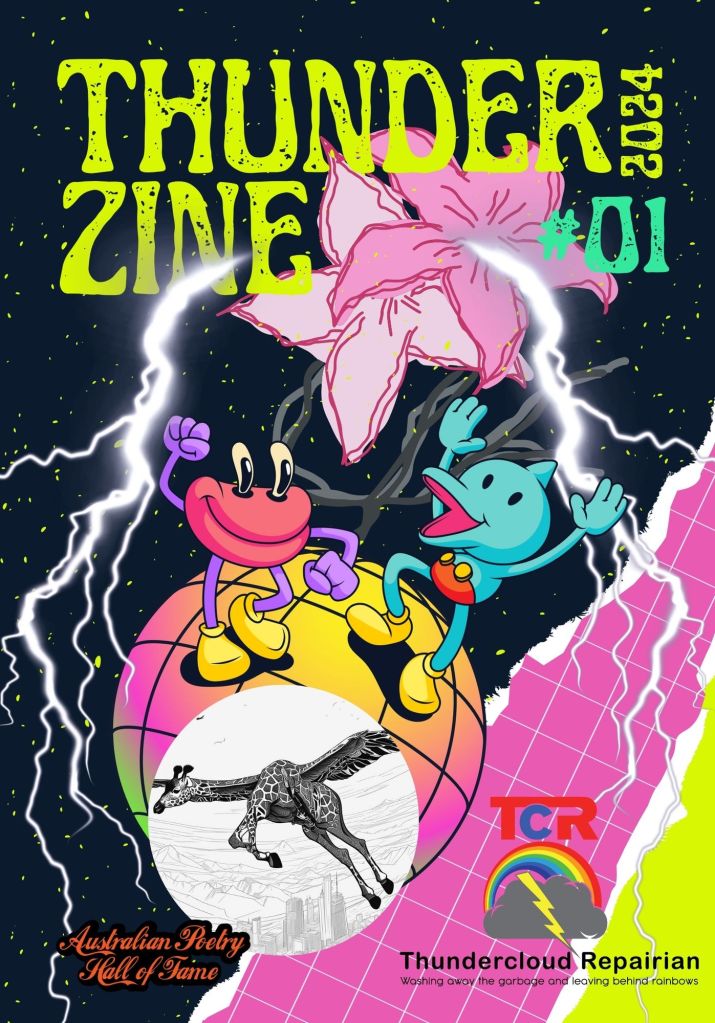
Explore the vibrant and colourful surreal poetry and artwork of Thundercloud’s Thunderzine#01
Are you ready to embark on a journey beyond the ordinary? My latest creation, a zine brimming with surreal poetry and art, has just been released!
This unique offering is a playground for the imagination. Within its pages, you’ll encounter poems that dance with dreamlike imagery and art that bends reality in captivating ways. It’s a space to lose yourself in the beauty and absurdity of the surreal.
Calling all fans of the strange and wonderful!
Whether you’re a seasoned explorer of the surreal or just dipping your toes into the unknown, this zine is for you. It’s a chance to experience the world through a different lens, to be surprised and delighted by the unexpected. You will discover what it is like to become a flying giraffe amongst other things.
Want your own copy?
For just $5 plus postage, you can own a piece of the surreal. Contact me directly at 1english1@gmail.com to secure your copy.
Don’t miss this opportunity to delve into a world where the ordinary is defied and the extraordinary takes centre stage. Let my surreal zine ignite your imagination and transport you to a place where anything is possible.
Get your own copy of the artwork or have it shipped directly to you. Don’t miss out on this unique artistic experience! #SurrealArt #Thunderzine #ArtExhibition #AustralianPoetry #ColourfulArt #ArtCollectors #CreativeCommunity #ArtLovers #PsychedelicArt #ArtInspiration
Thirty Four minutes into New Years Day, admittedly I had taken a gut full of magic mushrooms and the download occurs. “We are all born with 100 bad habit rabbits up our bum and when they are hungry they stick their heads out and growl. We feed them and they lay content and silent until they reawaken. The goal, shit them out and replace them with happy good habit rabbits that you need to feed.” (Thundercloud Wisdom)
Two days later, I left Rose, Fantasian Eatery our restaurant in Nimbin and went home to begin publishing the poetry that I had written. Jump forward twelve months and I am now living in Guyra running the Australian Poetry Hall of Fame and on the 1st of January 2021 I wrote the following poem.
The Rabbits
A Resolution Was made to shit out my rabbits
The bad habit rabbits and grow good habit rabbits
Because new good habits were what I needed to do
I said “Hasta la Vista baby” on January Two
“see you later princess, I’ve Dragons to slay
So you’re dropped like a bad habit, I’m going away”
I took my peace and love then left with a BOOM
Left a bad habit rabbit ranting in her dining room
Shat a bad habit rabbit out when I did a poo
Fed a new good habit rabbit in its place it grew
Found a town where the new good habit rabbits walked around
Settled down and said farewell to bad habit rabbit town
Make my bed in the morning, exercise and clean my room
All because last new years eve I ate a blue mushroom
The message from the mushroom was something like this
Shit out your bad behaving rabbits and they won’t be missed
Feed your good habit rabbits lettuce and sit them in the sun
Because good habit rabbits love feeling good and also having fun
Another year is here and time to shit me rabbits
Introspect, self reflect and eliminate old bad habits
Plant new good habit rabbit seeds after my last fart
Nurture them and water them with love from my heart
Going forward in the year with good habits that are new
New healthy behaviours adopted and grown by 2022
Here we are in 2024 and one of the bad habits that I had fallen into was waking in the morning and scrolling short videos before I get up to do my yoga and meditation. Upon identifying this pattern I decided not to look at my phone until after yoga and then go for a walk and listen to “Headway” book summaries. Some of the summaries that I have listened to are: “The Power of Habit” by Charles Duhig, “The 7 Habits of Highly Effective People by Stephen R. Covey and “Atomic Habits” by James Clear.
I have provided a summary below of what I have learnt so far and finish with my latest piece of “habit poetry” “Rabbits Part 2”
Pulling the Bad Habit Rabbits Out of My Ass
Outline
1. Introduction
– Overview of the metaphor
– Importance of habits in daily life
2. Understanding Bad Habits
– Definition of bad habits
– Examples of common bad habits
3. The Metaphor of Bad Habit Rabbits
– Explanation of the metaphor
– Why visualise habits as rabbits?
4. Identifying Your Bad Habit Rabbits
– Self-awareness and self-assessment
– Techniques to identify bad habits
5. The Impact of Bad Habits on Life
– Physical health consequences
– Mental and emotional effects
– Social and professional impacts
6. Why It’s Hard to Get Rid of Bad Habits
– The science behind habit formation
– Psychological attachment to bad habits
7. Pulling the Bad Habit Rabbits Out
– Strategies for breaking bad habits
– Real-life examples of habit breaking
8. Replacing Bad Habit Rabbits with Good Ones
– The concept of healthy rabbits
– Steps to replace bad habits with good ones
9. Conditioning the Good Habit Rabbits
– Importance of conditioning
– Techniques for maintaining good habits
10. Feeding the Good Habit Rabbits
– Consistency in good habits
– Positive reinforcement methods
11. The Role of Support Systems
– Family and friends
– Professional help and therapy
12. The Journey of Self-Improvement
– Setting realistic goals
– Tracking progress
13. Success Stories
– Inspirational stories of habit transformation
– Lessons learned from others
14. Common Mistakes in Habit Change
– Pitfalls to avoid
– Tips for overcoming setbacks
15. Conclusion
– Summary of key points
– Encouragement for continuous self-improvement
16. FAQs
– How long does it take to break a bad habit?
– What are some effective methods for habit change?
– Can bad habits be completely eliminated?
– How do I stay motivated during the process?
– What if I relapse into old habits?
Pulling the Bad Habit Rabbits Out of My Ass
Introduction
We’ve all heard of pulling rabbits out of hats, but pulling bad habit rabbits out of your ass? Now that’s a trick worth learning! Habits, whether good or bad, significantly shape our daily lives. This whimsical metaphor illustrates the struggle of getting rid of pesky habits that do us no good and replacing them with ones that enrich our lives.
Understanding Bad Habits
Bad habits are those repeated actions or behaviour that negatively impact our lives. They can range from smoking and overeating to procrastination and excessive screen time. While these habits might offer temporary comfort or satisfaction, their long-term effects can be detrimental.
The Metaphor of Bad Habit Rabbits
Why visualise habits as rabbits? Because rabbits are prolific and, when unchecked, can multiply rapidly. Just like these furry creatures, bad habits can quickly take over various aspects of our lives if not managed. Seeing these habits as rabbits makes the concept tangible and helps in visualising the process of removal and replacement.
Identifying Your Bad Habit Rabbits
The first step in breaking free from bad habits is self-awareness. Take a moment to reflect on your daily routines and identify actions that negatively impact your well-being. Keep a journal or use habit-tracking apps to pinpoint these behaviour. Techniques such as mindfulness and meditation can also aid in recognizing these habits.
The Impact of Bad Habits on Life
Bad habits can wreak havoc on your physical health, leading to issues like obesity, heart disease, and chronic fatigue. Mentally, they contribute to stress, anxiety, and depression. Socially, they can strain relationships and hinder professional growth. Recognizing these impacts underscores the urgency of addressing them.
Why It’s Hard to Get Rid of Bad Habits
Breaking bad habits is challenging because they are deeply ingrained in our neural pathways. The brain loves routine, and changing these patterns requires significant effort. Additionally, bad habits often provide immediate gratification, making it harder to resist their allure.
Pulling the Bad Habit Rabbits Out
To effectively pull out these bad habit rabbits, you need a strategy. Start by identifying triggers and replacing the habit with a healthier alternative. For example, if stress triggers you to smoke, try taking a walk instead. Gradual reduction and positive reinforcement can also be powerful tools. Real-life examples include people who successfully quit smoking by gradually reducing their intake or replacing it with nicotine patches.
Replacing Bad Habit Rabbits with Good Ones
Once you’ve yanked out those bad habit rabbits, it’s time to bring in the good ones. Healthy habits can include regular exercise, balanced diets, reading, or even daily meditation. Start small and build on each success. For instance, if you want to start exercising, begin with a 10-minute walk each day and gradually increase the duration.
Conditioning the Good Habit Rabbits
Conditioning is crucial for maintaining these good habits. Consistency is key. Set a schedule and stick to it. Use reminders and set achievable goals. Celebrate small victories to keep yourself motivated.
Feeding the Good Habit Rabbits
Just like rabbits need food to thrive, good habits need consistent effort. Positive reinforcement, such as rewarding yourself for sticking to a habit, can strengthen your commitment. Surround yourself with positive influences and avoid environments that trigger old habits.
The Role of Support Systems
No one is an island, and having a support system can make a huge difference. Share your goals with friends and family. Join support groups or seek professional help if needed. Therapy can provide tools and techniques for dealing with deeply rooted habits.
The Journey of Self-Improvement
Self-improvement is a continuous journey. Set realistic goals and track your progress. Celebrate milestones and don’t be too hard on yourself if you slip. Remember, every step forward, no matter how small, is progress.
Success Stories
Hearing from others who have successfully transformed their habits can be incredibly motivating. Look for inspirational stories and learn from their experiences. These narratives can provide valuable insights and encouragement.
Common Mistakes in Habit Change
Changing habits is not a linear process. Common mistakes include setting unrealistic goals, not having a clear plan, and not seeking support. Avoid these pitfalls by being patient with yourself and adjusting your strategies as needed.
Conclusion
Pulling the bad habit rabbits out of your ass and replacing them with good ones is no small feat, but it’s entirely possible with the right mindset and strategies. Start small, stay consistent, and seek support when needed. Your journey towards better habits is a marathon, not a sprint, so pace yourself and enjoy the process.
Bad Rabbits
Pulling the bad habit rabbits out of my ass
I feel so much more comfortable after they pass
Replacing them with healthy rabbits like conditioning
Feeding the good habit rabbits like going to gym
I took out a bad habit rabbit, had an empty feeling
Replaced it with a good habit rabbit as part of my healing
I used to sit and watch, now I plan, act and do
Fast and eat much less and I have more energy too
But there are still bad habit rabbits screaming inside
FEED US We are your dark side you cannot hide
There are times that I feed them just to shut them up
And then I justify to myself that it’s ok to fuck up
It’s not because personal growth is a journey of every day
Change and self improvement in each and every way
And those bad habit rabbits are just patterns learned
Good habit rabbits come from willingness to grow, change, and lessons learnt
FAQs
How long does it take to break a bad habit?
Breaking a bad habit typically takes anywhere from 21 to 66 days, depending on the individual and the habit.
What are some effective methods for habit change?
Effective methods include identifying triggers, replacing the habit with a healthier one, and using positive reinforcement.
Can bad habits be completely eliminated?
While it’s challenging to completely eliminate a habit, it can be significantly reduced and managed with the right strategies.
How do I stay motivated during the process?
Staying motivated involves setting realistic goals, celebrating small victories, and seeking support from friends, family, or support groups.
What if I relapse into old habits?
Relapses are common. Don’t be too hard on yourself. Reflect on the triggers that caused the relapse, adjust your strategy, and keep moving forward.









 Thundercloud Repairian